
Prague, Octobre 2, 2026
Our colleague, space physicist Benjamin Grison, has completed a major update and extension of the unique GRMB (Geospace Region and Magnetospheric Boundary) data set. This data set provides a detailed mapping of the four Cluster spacecraft crossings through various geospace regions and magnetospheric boundaries over more than two decades (2001 to 2023). Conducted alongside colleagues from the Institute of Atmospheric Physics of the Czech Academy of Sciences, the research was carried out in collaboration with the European Space Agency (ESA) and international partners. "The dataset is a great tool for any scientist doing large statistical studies," says Benjamin Grison. The updated methodology provides also a reference framework for training machine learning models and defining orbits for future space missions. The Cluster mission, developed by the European Space Agency (ESA), has been investigating the interaction between the solar wind and Earth's magnetosphere for more than two decades. "Processing such a massive volume of data required creating homogenized classification rules—essentially a 'legend' to reliably identify which geospace region the spacecraft is passing through," explains Benjamin Grison. Updated Methodology Resolves Ambiguities
Cluster (Artist's view, Credit: ESA)

On 1 September 2026, Tango reentered Earth's atmosphere at 21:30:31 UTC / 23:30:31 CEST, the last of the four Cluster satellites to do so. Tango had been specially lined up for a targeted reentry safely over the South Pacific Ocean, with the precision so high that a plane could fly out from Tonga and successfully record its demise for reentry science.
Researchers H. Hanzlíková and R. Huth from the Institute of Atmospheric Physics have established a new collaboration with the GEOMAR Helmholtz Centre for Ocean Research Kiel within the international SOLARIS-HEPPA project, which focuses on understanding the impact of solar variability on the Earth’s climate system and on improving climate prediction capabilities.

© Barka Fabiánová Photography
The research team has joined the international SOLARIS-HEPPA (Solar and High Energy Particle Precipitation) initiative, which operates within the APARC (Atmospheric Processes And their Role in Climate) project under the World Climate Research Programme (WCRP). Participation is complemented by a new collaboration with the chemistry-climate modelling group at GEOMAR Helmholtz Centre for Ocean Research Kiel, Germany.
SOLARIS-HEPPA brings together experts from leading international institutions to quantify solar signals across different components of the Earth system, improve the representation of solar forcing in climate models, and assess its role in seasonal-to-decadal climate prediction. Within the project, the team contributes to Working Group 2 (WG2), “Solar influence on climate (solar signals, possible mechanisms and processes) and near-term prediction.” The group investigates the mechanisms through which solar variability affects the climate system and explores how this knowledge can improve near-term and decadal climate predictions. This new collaboration builds directly on our ongoing research into how tropospheric circulation responds to solar variability.
Participation in the SOLARIS-HEPPA project will expand this research by integrating advanced modelling and observational approaches, thereby deepening understanding of the links between solar activity and climate variability, particularly in the troposphere. The knowledge gained may help improve climate prediction capabilities and enhance understanding of the processes that shape Earth's environmental conditions. In addition, the collaboration will provide opportunities to test new hypotheses about the propagation of solar signals through the atmosphere and their influence on regional climate patterns.


Prague, 11 June 2026
The European Space Agency (ESA) at its June meeting proposed the ambitious Plasma Observatory satellite mission as the primary candidate for its next medium-class scientific mission (M7) planned for launch in 2037. The programme, which will explore the plasma environment around Earth, outcompeted rival candidate missions: a two-spacecraft Mars orbiter and a gamma and X-ray space telescope for observing the early Universe.
Areas of Earth's magnetosphere and the physical processes that the Plasma Observatory will study.
Examples of astrophysical objects in which plasma dynamics play a significant role.
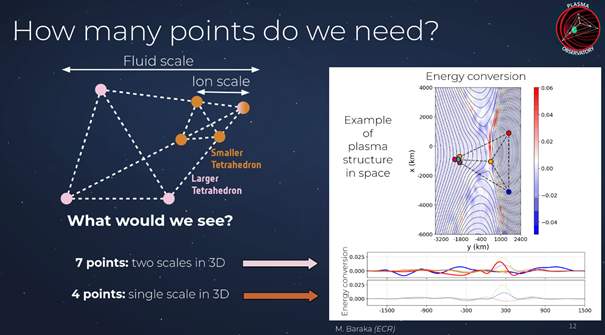
The constellation of seven Plasma Observatory satellites, covering two spatial scales.
Prague, 11 June 2026
The European Space Agency (ESA) at its June meeting proposed the ambitious Plasma Observatory satellite mission as the primary candidate for its next medium-class scientific mission (M7) planned for launch in 2037. The programme, which will explore the plasma environment around Earth, outcompeted rival candidate missions: a two-spacecraft Mars orbiter and a gamma and X-ray space telescope for observing the early Universe. "The Plasma Observatory mission will enable a fundamentally new type of observation of dynamic phenomena in space plasma around the Earth," says Jan Souček, Director of the Institute of Atmospheric Physics of the Czech Academy of Sciences, who has been involved in the project since its inception and was responsible for coordinating the payload of the proposed mission. This week, the ESA executive has proposed to the Science Programme Committee (SPC) that Plasma Observatory be selected for implementation with a launch foreseen in 2037. The Committee has taken note of this recommendation and will make the formal decision at its next meeting in November 2026.
Plasma, which consists of electrically charged particles (hot, ionised gas), makes up 99% of the visible Universe, and the transfer of energy within it governs how pretty much everything in the Universe works. "Plasma physics is extremely complex because it behaves as a fluid that simultaneously possesses electromagnetic properties. On large spatial and temporal scales, it acts as a fluid; on shorter scales, the ion dynamics manifests while on the smallest scales, the dynamics of free electrons dominates." explains Jan Souček, a space physicist who is one of the mission proposers and a member of the Science Study Team appointed by ESA. Scientists from the Czech Institute of Atmospheric Physics have thus participated in the project from the very beginning.
For the Plasma Observatory mission, Czech space physicists and engineers will develop a plasma wave analyser, an on-board instrument designed for the measurement and digital analysis of electromagnetic waves in space plasmas. This electronic module converts electric and magnetic signals from spacecraft sensors into a digital form, performing onboard signal processing and detection of physically interesting features within the data. This instrument will enable the transmission of data with a high scientific value to ground within the limited telemetry data rate available to the mission. The development and testing of the electronics unit, including firmware and flight software, will be lead by the team from the Institute of Atmospheric Physics in Prague with contributions from the Laboratory of Physics and Chemistry of the Environment and Space in Orléans, France.
"The team at the Institute of Atmospheric Physics specializes in this type of measurement, and Czech instruments of this kind are already successfully operating onboard the ESA-led Solar Orbiter mission to study the Sun up close, and JUICE, which is currently exploring Jupiter’s icy moons," notes Jan Souček.
The primary objective of the new mission will be to study how electrically charged particles (plasma) from the Sun interact with the protective magnetic bubble (the magnetosphere) that surrounds Earth. In particular, it would look at how the plasma gains energy through its interaction with Earth's magnetic field, how this energy enters and moves around the magnetosphere, and how it spreads to other particles around Earth.
Previous missions, including ESA's Cluster, found that these interactions happen on different scales in space and time – from a few kilometres up to tens of thousands, and from milliseconds to minutes. But Cluster – made up of four spacecraft – could only study one scale at a time.
Plasma Observatory would be a constellation of seven spacecraft, making it the first mission capable of studying the interactions on different scales of space and time simultaneously. The spacecraft will be separated by distances ranging from tens to thousands of kilometres, allowing scientists to compare data across multiple spatial scales at the same time.
"Combined with computer simulations, this will allow us to understand how particle energization to high energies occurs in space plasmas and how energy is transferred between large and small scales," emphasizes Jan Souček.
The new programme will also be innovative from a technical perspective. "Progress in the miniaturization of scientific instruments has allowed us to reduce the size and cost of the spacecraft themselves, making it feasible to build multi-spacecraft constellations within the strict cost requirements set by ESA," points out space physicist Jan Souček.
By exploring the magnetosphere, Plasma Observatory will provide a deeper understanding of the wider Universe. "Plasma around Earth serves as a natural laboratory for understanding the wider Universe, including the Sun, exploding stars, supernovas, and distant galaxies where direct measurements are impossible," concludes Jan Souček.
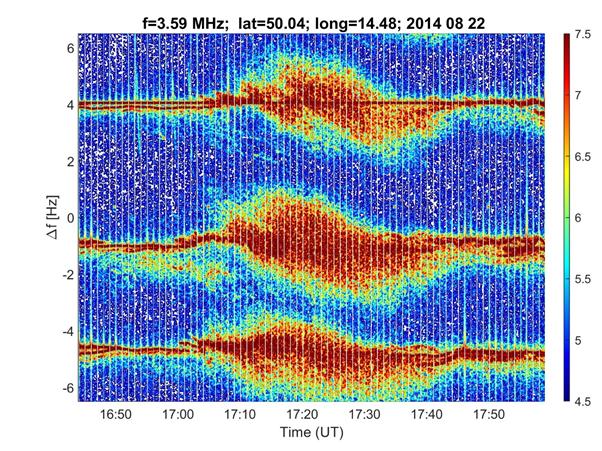
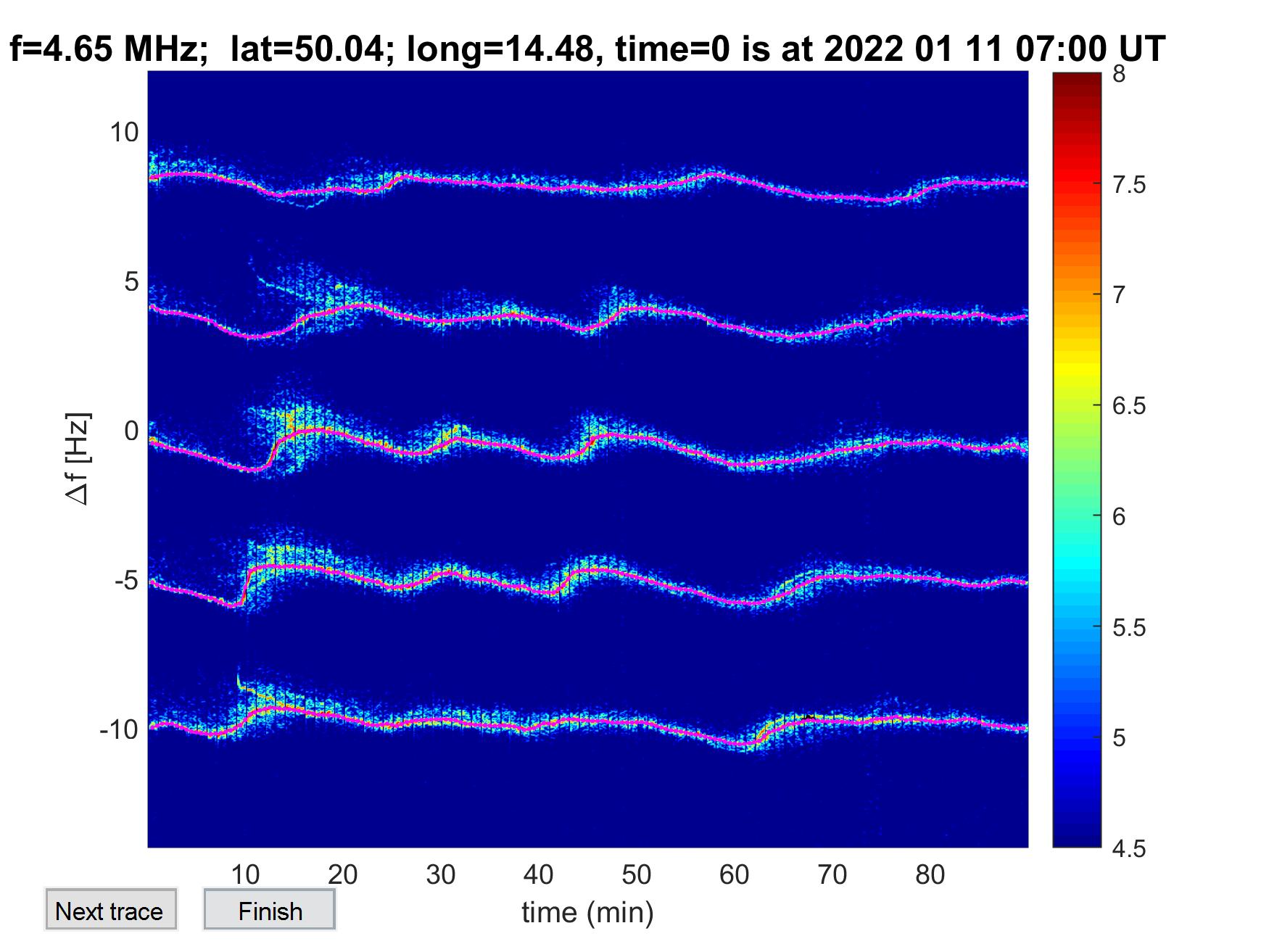
An example of Doppler shift spectrogram. Semitransparent Es layer can be detected as tilted noise structures in each sounding signal path.
- Marew, H., & Chum, J. (2026). Estimating sporadic E horizontal drift parameters over central Europe: First results from Doppler sounding. Journal of Atmospheric and Solar-Terrestrial Physics, 282, 106807. [DOI: 10.1016/j.jastp.2026.106807]
Prague, April 14, 2026

Illustration of a thunderstorm. Source: istock.com, credit: User9637786_380
- Kolmašová, I., et al. (2026). Properties of positive narrow bipolar events observed in South-Eastern France. Journal of Geophysical Research: Atmospheres. [DOI: 10.1029/2025JD045415]
April 8, 2026
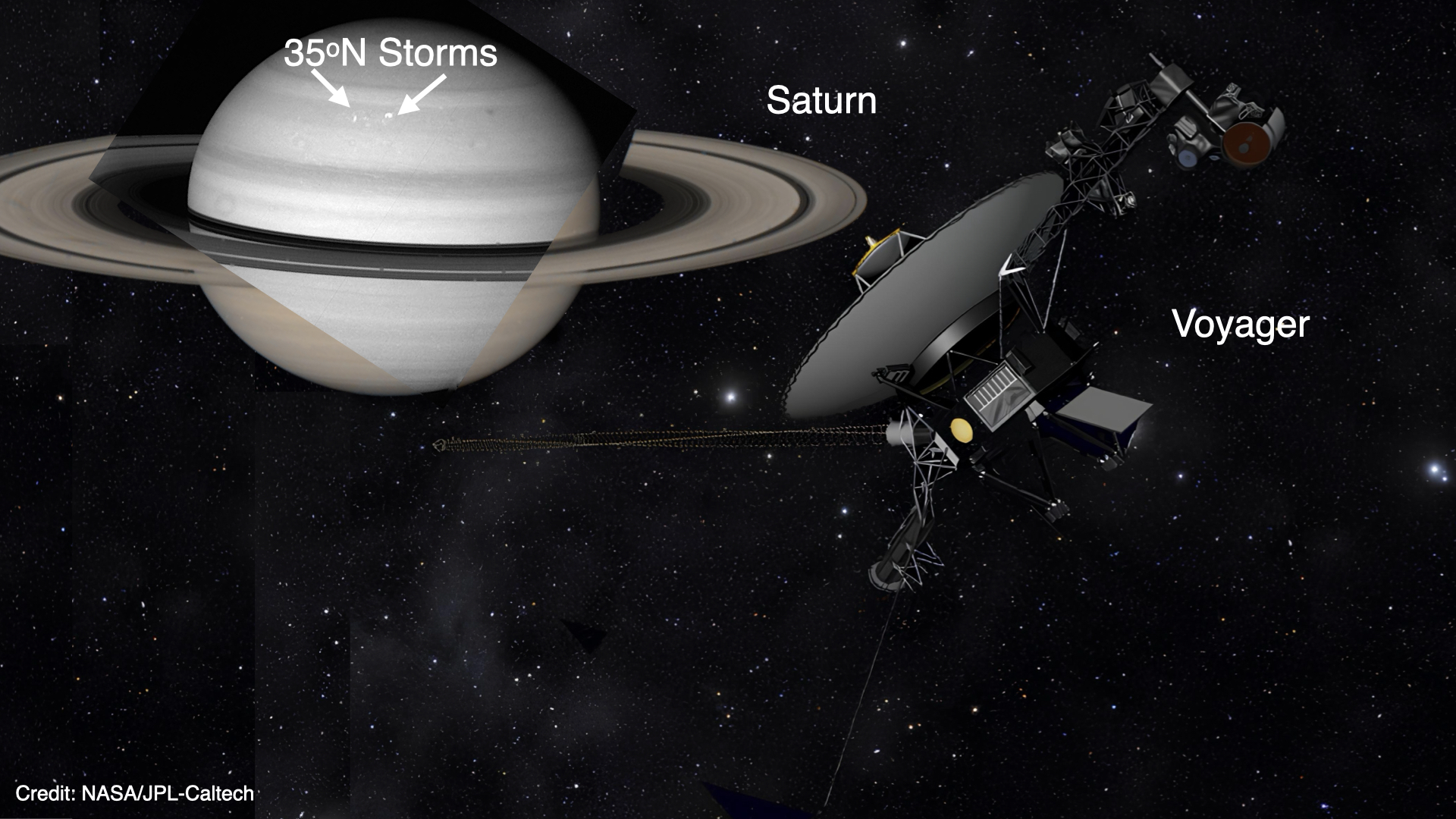
The Voyager spacecraft and source locations of lightning on Saturn. Credit: NASA/JPL-Caltech
- Imai, M., Fischer, G., Taubenschuss, U., Kolmašová, I., Santolík, O., & Píša, D. (2026). Polarization measurements and source locations of Saturn electrostatic discharges during the Voyager era. Journal of Geophysical Research: Planets, 131, e2025JE009079. https://doi.org/10.1029/2025JE009079
 Epidemics of acute respiratory infections (especially influenza) represent a major health issue during the winter season. Two recent publications have contributed to a better understanding of how weather has affected influenza activity and human mortality in the Czech Republic over the past four decades (1982–2020).
Hana Hanzlíková et al. (2026) found significant associations between weather – particularly temperature – and the variability and severity of influenza epidemics in terms of their impact on human mortality. Epidemics associated with high mortality tended to follow relatively cold winter periods (below-average temperatures) and were predominantly linked to the A/H3N2 virus subtype. In contrast, epidemics with a weaker impact on mortality were more likely to occur during relatively warm periods (average or above-average temperatures) and were associated with other virus types (such as A/H1N1).
An analysis by Ekaterina Borisova et al. (2026) provided further insight into how respiratory infections modify the impact of cold weather on mortality. The results showed that while cold weather places stress on the human body and increases the risk of death, it also promotes the spread of acute respiratory infections, which in turn contribute to higher mortality. The analysis suggests that approximately 12% of cold-related deaths in the period 1982–2019 could be attributed to the mediating effect of respiratory infections.
Taken together, these findings highlight that excess winter mortality is driven by a combination of direct temperature effects and indirect effects mediated through infectious diseases. They also demonstrate that the severity of influenza epidemics depends not only on meteorological conditions but also on the circulating virus subtype. This improved understanding is important for anticipating health risks and designing more effective public health responses to seasonal mortality patterns.
Reference:
- Hana Hanzlíková, Plavcová, E., Kyselý, J., Kynčl, J., Malý, M., Urban, A., 2026: Links between influenza epidemics weather characteristics and all-cause mortality in the Czech Republic, 1982–2020, BMC Public Health, 26 (1), 189, doi.org/10.1186/s12889-025-25861-9
- Ekaterina Borisova, Ballester, J., Hanzlíková, H., Plavcová, E., Kyselý, J., Kynčl, J., Urban, A., 2026: The mediating role of acute respiratory infections in temperature-mortality associations in the Czech Republic, 1982–2019, International Journal of Biometeorology, 70, 84.

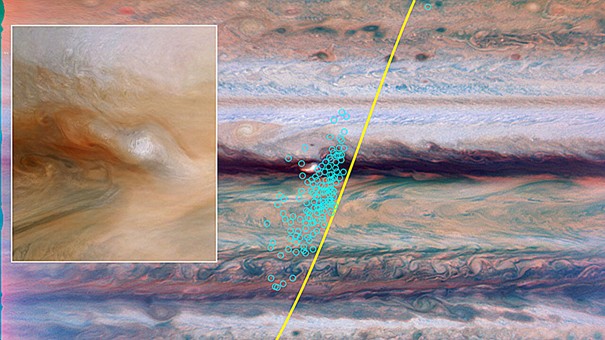
NASA's Juno spacecraft passed north to south (yellow track) over Jupiter's atmosphere in August 2022, detecting a cluster of radio pulses from lightning (turquoise circles). A background map from the Hubble Space Telescope identified the lightning source as an isolated "stealth superstorm". The inset shows a previous stealth superstorm plume from JunoCam data. Credit: NASA/JPL-Caltech/SwRI/MSSS/Björn Jónsson (JunoCam); AGU Advances (2026). DOI: 10.1029/2025av002083; HST and Juno MWR.
- Wong et al. (2026). Radio Pulse Power Distribution of Lightning in Jupiter’s 2021–2022 Stealth Superstorms. AGU Advances. Wiley Online Library. https://doi.org/10.1029/2025AV002083

1338
publications (since 2010)
197
projects (since 2010)
116
employees
60
years